Friday, 26 October 2012

Week 13: And We’re Going with a Glove……


Something the group had strived to NOT do throughout the whole design process, simply design a glove or wristband. We thought this was simplified, had been done before and was generally boring. However, after advice from tutors, this type of application was actually the best fit for our design project.


GLOVES vs SMART GRIPS – The following helps to demonstrate the process we went through to arrive at a glove product and why the two alternative options failed.

The Two Other options the group wanted to investigate included design either a “smart grip” that could have applications over several different tools or redesigning  an existing grip on a power tool (with the idea being that will be redesigning the grips on a whole suite of tools).

Smart Grip:
As a group, we believed this idea had a lot of potential. We envisioned a grip that could be taken off and applied to variety of tools, track data and ultimately provide feedback

This concept was generated by looking grips on Tennis Racquets 


Where it Fell Down:
This concept failed mainly due to poor ergonomics study/usability and logisitics of creating such an item . It became almost impossible to design a single grip that could accomplish everything we wanted to plus make it adaptable to a heap of different tools. If we were to move forward with this product, we would have to refine it to a particular brand or a particular type of too (i.e. a hammer)

Redesigning The Grip on a Power Tool:
Another Idea we had to facilitate this interaction centred around re-designing the grip on an existing range of power tools. The re-design would add the interaction elements as well as attempt define the grip for the product


Where It Fell Down:


Firstly, this idea was quickly shot down as it allowed almost no room for creativity amongst team members. We also realised that most power tools already had expertly designed grips that had gone through many iteration cycles. As can be seen here:

Much like the previous idea, If we did try to further develop this concept, we would have to focus specifically on one type of grip, on one type of tool, most likely from one brand of device. The Group believed this idea lacked the inventiveness and ingenuity that we strive for. Also, the application would be very limited.

NOTE ON BOTH:
Another Reason both concepts were ultimately rejected was also due to the fundamental reason that most floor tiling experts wear gloves while they work, a factor that had the potential to distort readings on the device, thus inhibiting much of the interaction process.  


The Glove Design and Why It’s the Best Choice:
The Glove was design was approved due to its vast array of potential functions and customisability as well as the added features it provides to the user. Essentially, this glove is both a protective aid and an interactive tool.

This device will give us the best result in the context and with the behaviour.

The following is an updated shot of our aesthetic model. This is it in production for week 16




Friday, 19 October 2012

Week 12: Researching and Justifying Our Interaction


Studio Session:
After spending what several weeks longer than what had been planned from the outset, the group had finally landed on a concept. Despite being “tutor-approved” several weeks earlier, we were realising that our project lacked a general degree of tangibility. We were still unsure about how we would facilitate the interaction and develop a product, even though we believed we had nailed and thoroughly understood the context or scenario behind our project.

At this point, further design and development of this idea would prove fruitless. The design team believed it was in best interests of the project to issue a “design freeze”. We are locking in our elements and are to begin final concepts for our interaction. \

Product:
At this point, the group have locked in the “scenario element” of our design project. The scenario is still floor tilers with particularly aim to prevent the injury of workers. The reason this is a solid concept, will be further explained later in this blog post.


USER TESTING AND RESEACH:
The Reason This Concept Works:
From what the group have discovered across research which included interviews and studies into the ways of floor tilers, the way they work and they way they interact with in the environment and tools around them.

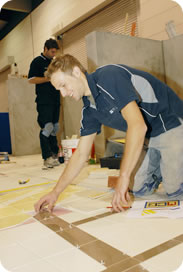
The Previous video clearly demonstrates the importance of our potential product. The tiler is seen adjusting between tools, both electric and manual, changing stances and moving through a variety of situations that use different cognitive, physical and emotional abilities. This dynamic context offers a variety of interactions, which our product must understand, and adapt to. This is what I personally believe is the key to Interaction Design. We understand the user, understand the behaviour, design a product that fits into the the surrounding behaviour/context and exploit this to design an Intuitive, Interactive Product.

Obviously, the video is set and filmed in a controlled environment. The video itself also doesn’t show a crucial part of the floor tiling process, a process we also hope to investigate. This deconstruction period is the cause of many injuries through tiling.


-----
Group:  Tool Analysis (Obervation and User Study)

As the group broke up for individual work,  we believe we need undertake research particularly into fabrication tools as used by floor tilers.

The following pictures show the variety of tools that group members looked at. These were done to try and develop some interesting insights. The tools investigated were deliberately diverse, some coming from outside the tiling/floor preparation professions. It was hoped at the time that this would help us innovate.


Friday, 12 October 2012

Week 11: Class and Concept Change / Re-approval...


WEEK 11: More Research and Ideation Sessions:

The Key concept through running through the early stages of this design project, or the way we interpreted the project, related to the interpretation of pain (information>news) from the individual back to the individual and the way said individual responds to this information. What we found, and why our concept works, centres on general work systems and beliefs of many manual labour professional across the country.

Firstly, It is important to elaborate on this phenomenon as it vital that everyone understands where we are coming from. From interviews, we found that for the life of a manual labourer, there income is based on their ability to work, and for most, No Work = No Pay.

However, at the same time, we noticed a growing trend in people claiming workplace compensation for minor, untreated and fake injuries. This process of fraudulently stealing for this system is both an economic drain on the industry but continues to degrade and destroy the reputation of many, many honest manual labour workers.

What these two combine to form is called, “Workplace Inefficiency”. This product will hopefully solve these problems, from both an employer and employee point of view. Employers gain a data management tool, a way to monitor employees as well as save huge sums of money in lost productivity. This will creative further awareness and a better understanding of employee welfare.

From an employee’s point of view, they get an honest reminder of when to stop work, otherwise they could be risking temporary and permanent damage if they continue with these actions.


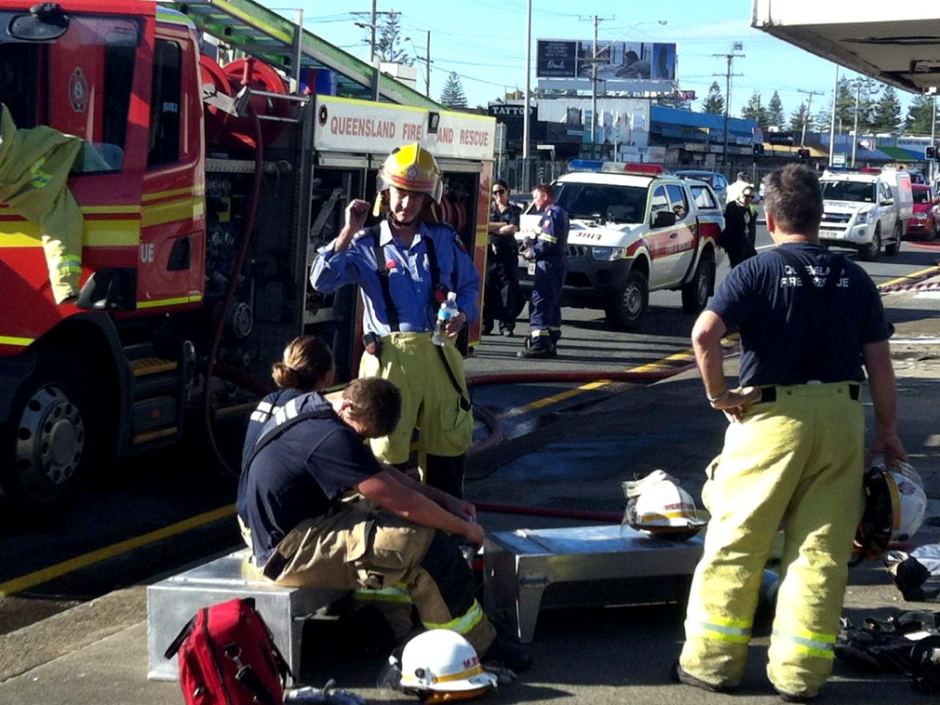
An example of a few different tradespeople hard at work


WHAT OUR PRODUCT WILL DO?
At this point, we’re relatively unsure about the physical form of the device, yet the concept of what we want it to do remains. We want a device that can link to a specific tool and use specfic data that relates to that tool to provide a feedback loop and timer for how long someone should use this tool. By understanding this data, the product can thus be designed only allow workers to not work to the point of injury, thus preventing physical harm and productivity loss.

The product will also be able to assist and protect workers by responding to the specific behaviour of an individual user. This will be done by monitoring the main response tool of a human to pain from a power tool, the human hand. This will be done by assessing behaviour and how a human hand reacts when confronted with stress. That is what the next section will detail.


HUMAN INTERACTION – Reactions to Hand Pain
Firstly, it is difficult to understand how different people react to pain as we all monitor pain differently. As an undergraduate designer who has extremely limited knowledge of Neuroscience, my limited understanding will be used to the best ability to understand this concept.

As can be seen here:  à  http://medicineworld.org/cancer/lead/2-2006/people-react-differently-to-pain.html

It clearly shows a problem we’re trying to address, those 20 percent of people who simply ignore constant pain. With successful implementation of our device, we hope we can correct this occurrence within our chosen context.

My understanding of reaction to hand pain is firmly rooted in personal observation techniques. The pictures below help demonstrate this concept.


From observation, the group noticed that when I human hand was in pain, they would either press on the hand at the point of pain, flex and unflex there hand to relieve tension through the tendons or shake their hand for a similar outcome. This observation of behaviour is what we will monitor in order to enhance the interaction.


WORKING THROUGH PAIN.
A key drive behind our concept is the fact that labourer in particular have a tendency to work through pain in order to get a job done one time, this means more potential jobs and therefore, potentially, more money.  The following represents a small section of overall reading done into the topic.

In general, there is little data available in regards to statistics of people who endure through work pain, however, much is written about chronic conditions such as arthritis and how people cope through the day. For many people, particular those of the older generations this is becoming an increasingly common occurrence. This data helps further justify the validity of our concept, and proves people have set up coping mechanisms to cope. With this in mind, we believe our product can help address this.


Friday, 5 October 2012

Week 10: Concept Approval


WEEK 10: CONCEPT APPROVAL

Throughout the Mid-semester break the design team found it incredibly difficult to confirm our concept as to head into further design development. It was absolutely vital that during this session, we completely finalised our interaction, concept and scenario.

At this point, the team was thoroughly confused about the direction of our project. Different tutors had different opinions about where the group was. Some believed our product and scenario were solid, therefore debating our interaction. However, other tutors believed our interaction was good, with out scenario and product severely lacking. Although relatively ambiguous, the questioning of the design from all angles allowed the group members to open their mind to new possibilities. This led the team on a rapid design exploration in order to find out what we needed and how the elements worked together.

These insights resulted in a better understanding of our original concept and the fact that we were looking into an industry that was far too subtle. Movements and interactions within this context were incredibly difficult to differentiate from normal movements. Therefore, we believed we had to move into a context that had more obvious and specific movements.

From Group brainstorming, we shifted our focus from a subtle office context into the realm of manual labour and its associated behaviours and interactions. From here, we decided as a group to spend the next week exploring these ideas


Note: I was personally away for these studio and Ideation session due to urgent medical reasons. Therefore, most the recount of our design process, particularly during the studio session is based on Blog Entries from Team Mates; Phil Pappas, Nick Kallinicos and David Buchanan.


**Revision** Additional Concept Work – Understanding A New Context, Product and Scenario.

At the point, the group had struggled trying to get this idea to work and a complete revision was required. Despite this massive re-work will still retained what the group believed was the core of our context. The relationship between a employee and management, the hierarchical structure of a business. This was a context/concept generated from concept bomb activities several weeks ago.

From what information has been supplied to me by teammates, the group re-focused our interaction onto a context which will have more obvious physical behaviours and interactions.


Therefore, the following sections of the blog will look into a variety of manual-labour intensive professions.

1. Fruit Markets Operator – Rocklea Brisbane:


Like most labour intensive jobs, working as a physical labourer at a fruit market is highly physical demands and stressful job. The job usually consists of shifts up to eleven and a half hours of calculating orders, receiving loads from suppliers, assigning loads to specific places and palettes, stacking/building the palettes, preparing them for transport and transporting the goods to retailers.

Potential Design – (Using Old Focus: Hierarchical Interaction)
A potential problem for employers in this context is managing resources to where it is needed. As personally witnessed, employers need to be able to respond to the supply of employees at any given time, managing the most efficient workers and marshalling them to create the most efficient and enjoyable workplace. A potential solution to this problem could be a roving/mobile management tool that tracks workflow. The idea above sees workflow as a steam (or flow of LEDs), which displays current output of the working station. Through physical interaction, the display will respond to

This is facilitated through data systems already in place at most distribution centres. This data will be exploited and transferred into this display system. The interaction element with the physical in the concept is lacking, yet it is believed that this will enhance interaction and co-ordination with the physical world rather than simply with a product to work in tandem with enhancing workflow.


2. Roofer – Brisbane
Roofing jobs are labour intensive and often very hazardous. Due this relatively high-risk profession, they adopt strict protocols and ways of operation. Therefore, by understanding this profession, we can exploit the fact that this one has strict and regmented operations and movements.


Potiential Design: 
As a result of understanding the profession and its numerous hazard risks, I envisioned a product that could be designed to protect the user as the complete his or her roofing work day.

The device would be able to monitor movements of the user through an accelerometer and sense that all safety equipment and elements be in order and operational. Essientially, this would be a glorified monitoring system, providing feedback both to the individual and employer. This could also be used to legally protect both employers and employees.


3. Fire-fighter  - Brisbane


Along a similar line to the previous idea, I thought of a product that could be used in two ways. Firstly, to communicate between the co-ordinator of a search and rescue as well as a communicate tool between rescuer and person in distress. This would come in handy mainly due to the fact that rescuers generally have difficultly in  being able to communicate with people in distress. Usually, this is because of a variety of masks as used by these professionals, particularly in a fire emergency situation

What would be needed would a device that could respond to the distress of person of person with the aim of calming them down during this situation. Many hours of psychological research would be needed for this to actually work!

The disadvantages of this idea present themselves in three forms. The communication device between fire-fighters and co-ordinators already exists on the market and change to this system is highly unlikely due to the safety factor and high levels of ingrained training associated with the profession. Secondly, the addition of another device into an already stressful situation would be pedantic and unnecessary. Thirdly and Finally, to make this a viable design, it would most likely take months of comprehensive ethnographic research to understand the interactions of such a specialisted profession, however, this concept was useful in making me think.

RESULT:
An understand of professions with more obvious and strict movements. These ideas will be taken back to the group for further consultation, refinement and hopefully design development. 

Saturday, 29 September 2012

Week 9: PRESENTATION + Concept Rejection

Below Is Our Presentation for Week 9:


These show our Product - Scenario - Interaction and how we plan to integrate all three.

Product: A Self Organiser which helps works communicate with superiors and manage tasks
Interaction:
Scenario: A highly structured highly

How we percieved "sensing the news": Simply the transfer of information in a hierarchical manner, from a manager to staff.


Feedback:
Tutors and LifeTec experts believed that the Scenario and Product were satisfactory and were ready for product. However, it was believed we lacking in the interaction element. The product interaction was believed to be too complicated and lacked a solid interaction. This will be sorted out for concept approval after/during the mid semester break.


In the tutorial, we deliberated and tried to consider another concept for approval, in order to proceed with construction planning. However, the idea was half-baked, rushed and sloppy

Thursday, 27 September 2012

Week 8: Our Concept Moving Forward and Building a Presentation

Week 8 involved an explanation and understanding of Interaction Design by Lecturer Jared Donovan. A leader in Gestural and User Experience Design who outlined some key Theory on Two Types of Interaction, Semantic and Action-Centred Design Approaches.

Semantics involves physical representations of concepts, interactions or information. These physical representations can be manipulated and moved around. The gestures however, are minimal, the users movements and actions generally dont inform or influence the interaction. Also, from examples seen, many values with an the interaction produce discrete responses. For example, the most things are either "On" or "Off", this is due to the aforementioned lack of human interaction which is naturally varied

Examples of Semantic Design:

1. Music Cube:
As can be seen below the small balls are physical representations of a musical note. This icon is arbitrary and when it is placed at certain point above the air pressure device, it creates a certain note. The value of the interaction is discrete and does not respond to specific behaviour of a user.


An Action Centred approach, on the other hand is based within the physical. The interaction with the product is based on how the user moves. Unlike Semantic Interactions which are based in a physical representation.

1. The LightRail


As opposed to the previous semantic designs,  the light rail  is the oppositie. Overall, it is a great example of action centred design. The project effortless creates a dialogue, a system of interaction and feedback, with the user. As the dancer moves, the lightrail responds to her touch. Values are not discrete as the level of light output as well as the location of the light depend subtle interactions with the user. Finally, the user themselves is the key input into the interaction. Rather than a arbitrary icon, the design is operated by the user. As you can see, it responds to her movements

2. Zygote Interactive Music Ball
http://vimeo.com/802394


Note: this video may not work on final blog post. Please Follow link above for the original source.

The Zygote Interactive music ball is, I believe, another example of an action-centred interaction design. The ball responds to the natural human movements of the user as people play with device in a giant crowd. The ball facilitates an expression of human emotions through the concert. Once again, the human touch is the input on the interaction and the device responds to continuous data from the user

However, what I find fascinating is that this design does not simply react and interact with one user. On the contrary, the design is a tool which facilitates interaction with a whole crowd of people. Also, the product facilitates interaction between a crowd AND performer/main event. Personally, this really opened my eyes to the potential scale of interaction design. Previously, I believe I had got stuck in the way I was thinking about a one on one, person to product interaction. This design creates an interaction from one product to a variety of different people.


Group Concept Development:

At Present, we are still grappling with creating and resolving the "Triad" of design elements for this project. We have a hierarchical communication tool which is used to translate information from a manager/superior to an employee.

Some group concept sketches can be seen here


However, what I'm finding difficult to process is that anything we come up with in this present context already exists in a better way out in the world. I believe that we are going to have to rethink our context and solutions in the future.


Tuesday, 25 September 2012

Week 7: Semester Project Progression and Preparation for Week 9 Presentation

An Analysis of Universal Design and Interaction Design

After visiting LifeTec, it became paramount to consider Universal Design in the overall design and application of Interaction Design. This became obvious to myself when I looked into gestural design. Much like most design work, if some people become excluded by the application of gestural design, the design is inherently flawed. However, at the same time, gestural design, as opposed to traditional product design, I believe this concept is quite difficult. This is because gestural design, from what I understand, is heavily rooted in a specific context. This is so the specific gestures have meaning are work within the context.

An Example of Universal Design and Interaction Design Working Together....
From what little knowledge of interaction and universal design I have as an undergraduate, I believe that the two would best work together when there is as little physical interaction as possible. This would allow for less needed consideration of physical ergonomics as opposed to a heavy physical interaction product. Also, another option is to try to reduce the amount of physical movement involved in the interaction, however, this also produces it owns potienital problems. For example, if a gestural interaction becomes so small and minute to accommodate a physical disability, it could be easily misinterpreted or unintensionally used by everyone. The gesture could also lose its meaning within the context.

I Believe When you lose this physical barrier, the interaction has the potienital to become universal.


This is think is demonstrated in the concept above. Although the Interaction is relatively innocuous, the user only needs to physically move around the space. No fine motor skills or fine manipulation of objects is required, the person only needs to view and move. The user also recieves instand feedback


And An Example of it not.... 
I'm finding it difficult to find a failed experiment of interaction and universal design. As I have already mentioned many times, I think the blending of the two is quite difficult and will only work in a specific context with specific users.


Interaction Design and Universal Design: Accommodating a Mental Disability 
After Thinking and Researching for information on the topic, I've found it difficult to find resources of the application of interaction design and mental disabilities. Potientially, I think that enhanced physical interaction would be beneficial as people with mental disabilities may be able to psychically modify interactive devices as opposed to relying on a mental model